
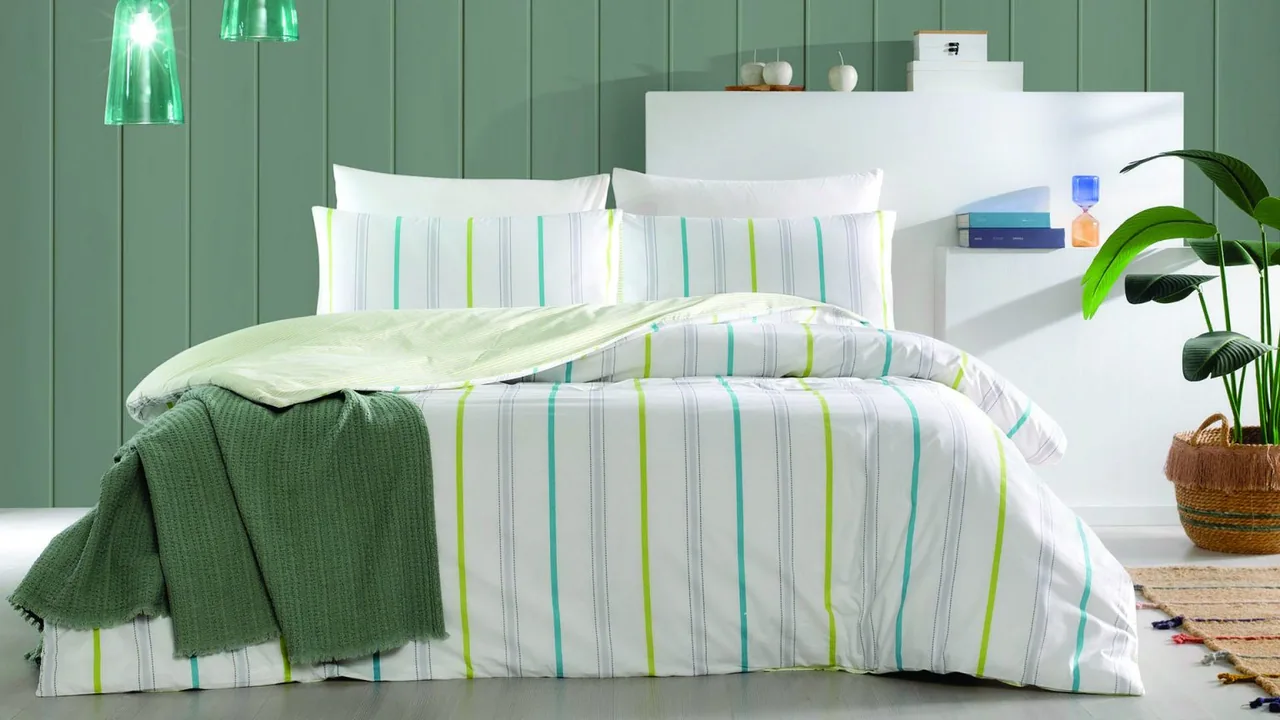
What we expect from a duvet is usually warmth. But the body gives off a considerable amount of moisture during sleep, and where that moisture goes affects whether we wake up rested or tired.
Polyester-fibre duvets are light, economical and easy to wash. But polyester fibre does not absorb much moisture. Sweat gets trapped between the duvet and the skin; you sweat, then feel cold, and never quite know why. Wool duvets are a quiet hero here. Wool fibre can hold close to a third of its own weight in moisture without feeling damp, and then release it slowly. It evens out the temperature. Down gives the best insulation for its weight, provided it has a good casing and the right care.
In the UK and some other markets, duvets are sold with a tog rating, which measures thermal resistance. Where no tog value is given, look at the filling type and filling weight on the label. Our observation is that many homes use a heavier duvet than they need. In a heated bedroom, a thin, breathable duvet usually brings more peaceful sleep.